Most Read
Abstract
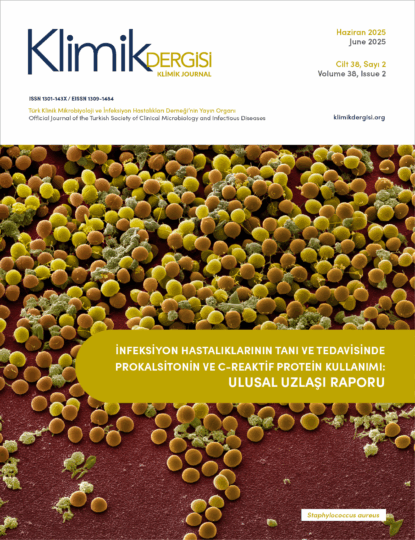
Objective: This study aimed to evaluate the distribution of Staphylococcus aureus isolates obtained from various clinical specimens according to methicillin resistance and to determine their antibiotic resistance rates.
Methods: A total of 2760 S. aureus isolates obtained from various clinical specimens from inpatients and outpatients who presented to our hospital between January 2022 and December 2024 were retrospectively examined. Isolates were classified according to methicillin resistance as methicillin-resistant Staphylococcus aureus (MRSA) and methicillin-susceptible S. aureus (MSSA). Antibiotic susceptibility tests were performed using an automated system and/or the disk diffusion method, and the results were evaluated according to the criteria of the European Committee on Antimicrobial Susceptibility Testing (EUCAST). Statistical analysis was performed using IBM SPSS Statistics 26.0.
Results: Of the isolates, 1199 (43.4%) were identified as MRSA and 1561 (56.6%) as MSSA. The two groups differed significantly in terms of sex distribution (p=0.03). MRSA isolates were more frequently detected in hospitalized patients, whereas MSSA isolates were more frequently detected in outpatients (p<0.001). A significant increase in the MRSA rate was observed in 2024 (p<0.001). Antibiotic resistance rates were higher in MRSA isolates than in MSSA isolates. Resistance to linezolid, vancomycin, or teicoplanin was not detected.
Conclusion: Our study showed that the MRSA rate was 43.4% and that antibiotic resistance rates were higher in MRSA isolates than in MSSA isolates. Our findings support the importance of infection control measures and antibiotic resistance surveillance in monitoring MRSA and MSSA infections.
-
This work is licensed under a Creative Commons Attribution-NonCommercial 4.0 International License (CC BY-NC 4.0).