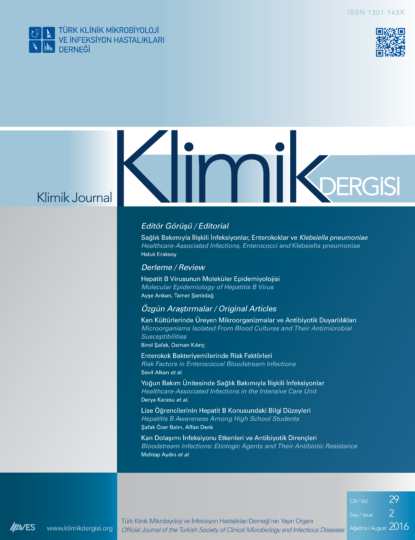
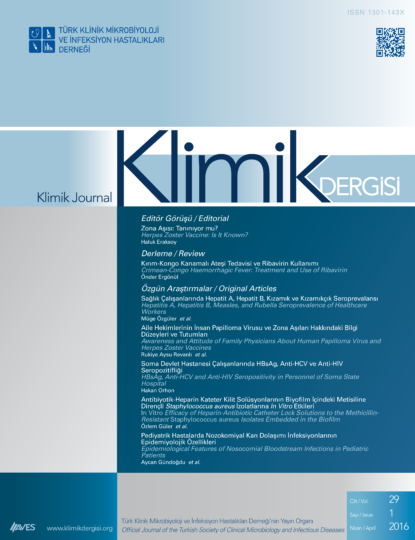
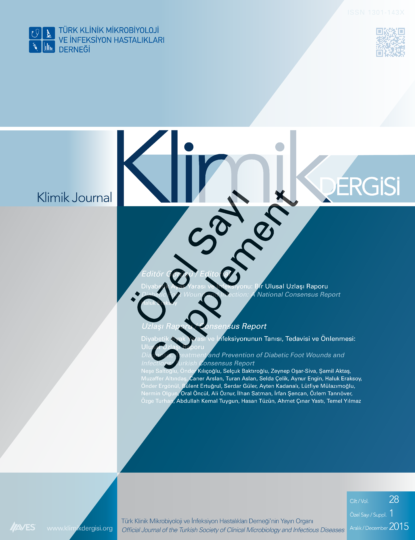
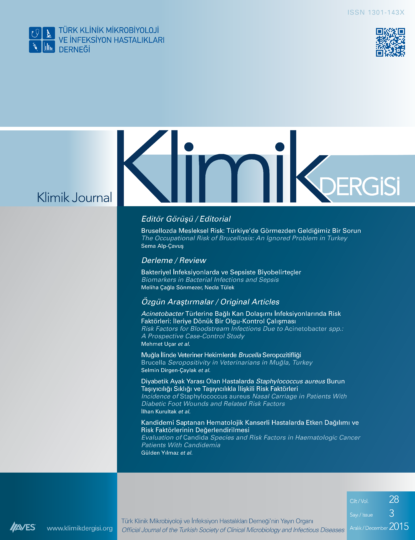
Most Read
Instructions to Authors
Klimik Journal‘s editorial and publication processes follow the guidelines of the International Committee of Medical Journal Editors (ICMJE), World Association of Medical Editors (WAME), Council of Science Editors (CSE), Committee on Publication Ethics (COPE), European Association of Science Editors (EASE), and National Information Standards Organization (NISO). The journal also adheres to the Principles of Transparency and Best Practice in Scholarly Publishing (doaj.org/bestpractice).
Klimik Journal aims to publish high-quality basic and applied research articles on the diagnosis, treatment, and prevention of infectious diseases across the fields of infectious diseases, clinical microbiology, virology, parasitology, immunology, and epidemiology. The journal also publishes reviews, editorial opinions, letters to the editor, and case reports.
The journal’s target audience includes specialists in infectious diseases and clinical microbiology, as well as physicians and practitioners interested in infectious diseases.
Klimik Journal is an international journal with independent and unbiased peer review. We evaluate manuscripts using a double-blind system.
The Editor-in-Chief evaluates submissions without bias to age, ethnicity, gender, nationality, religion, sexual orientation, or political views.
The journal’s language of publication is Turkish. However, manuscripts written in English by international authors may also be accepted.
No publication fee is charged for manuscripts submitted to the journal.
Manuscripts must be submitted through the Klimik Journal online submission system. All submissions are checked for technical compliance first. The language, figures, tables, required documents (author contribution form, copyright transfer form, patient consent for case reports, and ethics committee approval), and references are reviewed. Plagiarism screening is also performed. Manuscripts that pass this stage go to the Editor-in-Chief.
The Editor-in-Chief checks if the manuscript meets the journal’s publication policy, follows the author guidelines, and contributes scientifically. If appropriate, the manuscript is assigned to an editor to start the scientific review. The editor assigns at least two reviewers to assess scientific content and provide suggestions, criticisms, and contributions. The manuscript may also be referred to the Statistics Editor, if needed.
Reviewers are selected from experts in the relevant field and are expected to have no conflicts of interest with the authors. To prevent bias, information regarding the authors and their institutions is concealed when the manuscript is sent to reviewers.
The editor reviews the reviewers’ suggestions and criticisms and, if needed, shares them with the authors. If required, more reviewers may be assigned. Reviewer identities are kept confidential. This ensures manuscripts are reviewed objectively through a double-blind process.
Authors revise the manuscript based on reviewers’ comments, then return it to the editor. The manuscript may be returned to the reviewers for another evaluation. Manuscripts found satisfactory are accepted. Manuscripts deemed unsuitable are rejected. Further revisions are returned to the authors.
After a manuscript is accepted for publication, it is reviewed by both English- and Turkish-language editors. The publisher then prepares the manuscript for publication and sends the typeset version to the authors for final review and approval. Articles that are finalized in this way are published electronically on the journal’s website.
Authors must acknowledge and provide information regarding any grants, contracts, or other financial support received from foundations, institutions, or commercial organizations.
Manuscripts must not be published elsewhere or under consideration by another journal. A full report based on a previously published preliminary report, such as a conference abstract, is permitted. Authors wishing to remove content during publication must submit a written request to the Editor.
If the authors wish to withdraw a manuscript for any reason, a written request explaining the reasons for withdrawal must be submitted.
The name of the institution where the authors work and the name of the institution or department where the study was conducted should not be included in the main text of the submitted manuscript.
The corresponding author must provide the full correspondence address, including telephone number, fax number, and e-mail address. The contact information of the corresponding author is published in the journal.
Authors should keep copies of all submitted manuscripts and related documents.
If the whole or any part of the submitted manuscript is to be published elsewhere, the Editorial Office must be informed.
ARTIFICIAL INTELLIGENCE (AI) USE STATEMENT
If artificial intelligence (AI) tools are used during manuscript preparation for Klimik Journal, this must be declared. AI tools should only assist with language editing, spelling, or grammar correction. Authors are fully responsible for the scientific content, including data analysis, interpretation, and conclusions. AI tools cannot be authors.
Authors must indicate the use of AI tools on the title page under the heading “Artificial Intelligence Statement.” If AI tools were used, the specific tool(s) and their purpose (e.g., language editing or grammar correction) should be specified. If no AI tools were used during manuscript preparation, this should also be explicitly stated.
COPYRIGHT
Authors must upload the Copyright Approval Form to the online manuscript submission system when submitting manuscripts to Klimik Journal. By signing, authors agree that, if accepted, their manuscript will be published under the Creative Commons Attribution–NonCommercial 4.0 International License (CC BY-NC 4.0).
The CC BY-NC 4.0 license lets others share, copy, distribute, reproduce, and adapt the work in any medium or format for non-commercial use. They must give appropriate credit to the original work.
When authors use previously published material—including figures, tables, or other content—they must obtain permission from the copyright holder. Authors are fully legally and financially responsible for securing all permissions.
All opinions and reports in articles published in Klimik Journal are solely those of the author(s). KLIMIK, the Editor-in-Chief, the Editorial Board, and the publisher do not accept any legal liability or responsibility for these statements.
POST-PUBLICATION CORRECTIONS
Klimik Journal prioritizes scientific accuracy. If errors or omissions affecting a published article’s meaning or interpretation are found, we issue a correction when needed.
Corrections are published in the online version of the journal with a clear reference to the original article, and the details of the corrected information are explicitly indicated. An electronic link to the relevant article is also provided.
Authors who identify an error in a published article are expected to inform the journal editorial office as soon as possible. If the error significantly affects the reliability of scientific findings, the editor will assess the issue and may issue an editorial note, initiate a correction, or start a retraction process in accordance with international publication ethics guidelines.
AUTHORSHIP
Each individual listed as an author is expected to meet the authorship criteria recommended by the International Committee of Medical Journal Editors (ICMJE) (www.icmje.org).
According to the ICMJE recommendations, authorship should be based on the following four criteria:
- Substantial contributions to the conception or design of the work; or to the acquisition, analysis, or interpretation of data for the work.
- Drafting or revising the manuscript critically for its intellectual content.
- Final approval of the version to be published.
- Agreement to be accountable for all aspects of the work and to ensure that questions related to the accuracy or integrity of any part of the work are appropriately investigated and resolved.
During manuscript submission, the corresponding author must upload the Authorship Contribution Form, which specifies the contributions of each author to the manuscript, through the journal’s online manuscript submission system.
MANUSCRIPT STRUCTURE
Manuscripts should be organized into sections according to the manuscript type. Each section must start on a new page: title page; abstract and keywords (Turkish and English); main text; references; tables/figures (each table should be presented on a separate page together with its title and footnotes); and figure legends.
The title page must include the Turkish and English titles, as well as the short titles, for all manuscript types.
All sections of the manuscript—including the title page, abstract, main text, acknowledgements, tables, and figure legends—must be prepared in 12-point font and double-spaced. Adequate margins should be left on all sides of the page. All pages of the manuscript should be numbered consecutively, starting from the title page. In addition, line numbers should be included in the main text.
The title of the manuscript should be concise while accurately reflecting the content.
Spelling and grammatical errors in manuscripts accepted for publication are corrected without altering the scientific content of the article. Authors are deemed to have accepted such corrections.
Keywords should be provided in accordance with Medical Subject Headings (MeSH) (https://www.nlm.nih.gov/mesh/Mbrowser.html).
STATISTICAL ANALYSIS
Although Klimik Journal has a statistical editor, adherence to the following principles when performing statistical analyses in original articles and reporting the results will help prevent unnecessary delays and improve the clarity of the manuscript.
Statistical analyses and the reporting of results should follow the principles described in the article Statistical Guidelines for Contributors to Medical Journals by Altman DG, Gore SM, Gardner MJ, and Pocock SJ (BMJ. 1983;286:1489–93). The name and version of the statistical software used in the analysis should be specified.
When parametric tests are used to compare continuous variables, results should be reported as mean ± standard deviation. When nonparametric tests are used, results should be presented as median (minimum–maximum) or as percentiles with the interquartile range (IQR).
When reporting relative risk (RR), odds ratio (OR), or hazard ratio (HR), confidence intervals must be provided in addition to the p-value.
ARTICLE TYPES
Original Article
An original article should be prepared as follows:
- Title page.
- Structured Turkish abstract (objective, methods, results, conclusion) and structured English abstract (maximum 300 words each).
- Turkish and English keywords (a minimum of three and a maximum of six keywords should be in accordance with the National Library of Medicine, Medical Subject Headings database.).
- Main Text: It should not exceed 5000 words, excluding references. It should be divided into Introduction, Methods, Results, and Discussion sections. The “Methods” and “Results” sections can be divided into subtitles if necessary. The Methods section should include the name of the ethics committee and the approval date and number.
- Acknowledgment (optional), conflict of interest statement, authors’ contribution to the study/article.
- References: Detailed rules below should be followed, and the number of references should not exceed 50.
- Tables and Figures: If available, they should be consecutively in the order they are referred to within the main text; each should be given a short title, and the title should be placed at the top of the tables and below the figures.
Case Report
Since the number of case reports in the journal is limited, only rare cases with difficulties in diagnosis or treatment or educationally valuable cases containing extraordinary information and that can be evaluated as interesting will be accepted.
A case report should be prepared as follows:
- Title page.
- Unstructured Turkish abstract and English abstract (maximum 150 words each).
- Turkish and English keywords (A minimum of two to a maximum of four keywords should be in accordance with the National Library of Medicine, Medical Subject Headings database.).
- Main Text: It should be structured as “Introduction, Case (s), Discussion” sections and a maximum of 1500 words.
- References: Detailed rules below should be followed, and the number of references should not exceed 10.
- Tables and Figures: If available, they should be consecutively in the order they are referred to within the main text; each should be given a short title, and the title should be placed at the top of the tables and below the figures.
Review Article
Klimik Journal accepts review articles, upon the invitation of the Editor-in-Chief, from people who have in-depth knowledge in their field, are nationally and internationally known for their work in a certain field in their professional life, and have many cited publications in that field. It is expected that the review articles will summarize the current knowledge on a certain topic, reveal the knowledge gap, shed light on future studies, and open a horizon for those working in the field of infectious diseases and clinical microbiology.
A review article should be prepared as follows:
- Title Page.
- Unstructured Turkish abstract and English abstract (maximum 150 words each).
- Turkish and English keywords (A minimum of three to a maximum of six keywords should be in accordance with the National Library of Medicine, Medical Subject Headings database.).
- Highlights: It is a 4-5-item section that includes the most remarkable headings of the current knowledge in clinical practice and/or scientific development, the most critical unanswered questions, and/or scientific predictions. It should consist of a maximum of 150 words.
- Main Text: The review article’s main text can be divided into subheadings as the author deems appropriate.
- References: Detailed rules below should be followed, and the number of references should not exceed 75.
- Tables and Figures: If available, they should be consecutively in the order they are referred to within the main text; each should be given a short title, and the title should be placed at the top of the tables and below the figures.
Consensus Report and Guideline
Klimik Journal accepts consensus reports and guideline articles on the diagnosis, treatment, and prevention of diseases in the fields of infectious diseases and clinical microbiology. These studies, developed with the broad participation of specialists from diverse backgrounds and perspectives, aim to set priorities, clarify clinical recommendations, and inform policy formation.
Adopting this perspective, it is crucial to evaluate current scientific evidence, present it in a consensus format, and communicate it effectively to all stakeholders.
The following instructions should guide the preparation of Consensus Reports/Guideline articles:
- Unstructured Abstracts: Provide Turkish and English abstracts of no more than 150 words.
- Keywords: Include 3–6 keywords in Turkish and English, in alignment with the Medical Subject Headings (MeSH) by the National Library of Medicine (NLM).
- Main Text
– Introduction: Include the aim, general framework, target audience, and geographical scope of the study. If the study is an update, explain the need for the update and summarize the key differences and changes from the previous study, using visual aids like tables or infographics if necessary.
– Methods: Describe the roles and specialties of those conducting the study, along with inclusion criteria. Summarize the material used, its scope, and selection criteria. Clearly state the methods and techniques employed (e.g., Delphi, RAND-UCLA, nominal group technique). Indicate the historical scope of the study.
– Use consistent language and terminology throughout the text.
- Conflict of Interest: Disclose any potential conflicts of interest involving study directors and panelists. Provide details on how these conflicts were managed.
- References: References should follow the specified style and have no numerical limit.
- Tables, Figures, and Images: Number these consecutively based on their order in the text. Provide descriptive titles above tables and below figures and images. If sourced from other publications, ensure proper permissions and citations are obtained and indicated. Patient images must only be used with prior consent.
Opinion Essay/Report
This is the article containing the opinions or reports of the institutions or individuals who have a say in the field of infectious diseases and clinical microbiology on important issues on the agenda. It is published after editorial evaluation without being subject to peer review. There is no word or reference limit. The opinions in such articles bind the author, and the criticisms and contributions of the journal readers regarding the opinion will also be published under the same title after an editorial evaluation. Thus, it is aimed to provide a platform for scientific discussion on important issues concerning the field.
From Image to Diagnosis
From Image to Diagnosis presents an original, instructive, or noteworthy finding based on clinical, radiological, laboratory, or histopathological images. Submissions should be concise, emphasizing the image’s originality and diagnostic value rather than providing a detailed case history. The finding should be briefly discussed and substantiated with relevant literature. The text should include the sections Case and References. An abstract is not required for this article type. The text should not exceed 500 words (excluding references but including figure legends). A maximum of four authors is permitted, and the article may include up to 5 references. Images must be high-resolution and accompanied by explanatory captions. Patient consent is mandatory for all clinical images included in the publication.
Editorial
Editorial is an opinion letter written by an expert scientist in the field of the article, upon the invitation of the Editor-in-Chief, regarding an original article in Klimik Journal. The editorial is expected to summarize the findings in the relevant article and include its contribution to the field of science and future views.
An editorial should be prepared as follows:
- Title Page.
- Main Text: It should not be subdivided into subheadings and should contain a maximum of 500 words.
- References: Detailed rules below should be followed, and the number of references should not exceed 5.
- Tables and Figures: This type of manuscript contains at most one table or figure.
Letter to the Editor
A Letter to the Editor is published in order to express the opinions of the readers about an article published in Klimik Journal or to express an opinion on any subject that is of interest to Klimik Journal.
A Letter to the Editor article should be prepared as follows:
- Title Page.
- Main Text: It should not be divided into subheadings and should consist of a maximum of 500 words.
- References: Detailed rules below should be followed, and the number of references should not exceed 5.
- Tables and Figures: This type of manuscript contains at most one table or figure.
REFERENCES
The reference style is based on the National Library of Medicine (NLM) “Citing Medicine” style. https://www.ncbi.nlm.nih.gov/books/NBK7256/
Journal titles should be abbreviated according to the List of Journals Indexed for MEDLINE. https://www.ncbi.nlm.nih.gov/nlmcatalog/journals
Journal Article
Less Than Six Authors
Çelik M, Karabacak A, Arzu N, Ergon MC, Avkan-Oğuz V. [The impact of implementing a minimum evaluation bundle on clinical outcomes in the management of patients with Staphylococcus aureus bacteremia]. Klimik Derg. 2025;38(2):97–102.Turkish. [CrossRef]
More Than Six Authors
Alves J, Schouten J, Thursky K, Paz RN, Rello J, Lye DC, et al; AMS Competencies Study Group. Establishing core competencies for antimicrobial stewardship teams: a consensus development using the modified Delphi technique-an European Society of Clinical Microbiology and Infectious Diseases Study Group for Antimicrobial Stewardship position paper. Clin Microbiol Infect. 2025;31(8):1313–20. [CrossRef]
Book Chapter
By Author
Turkish
Serter D. Virüs, Riketsiya ve Klamidya Hastalıkları. İstanbul: Nobel Tıp Kitabevleri; 1997: 27–32.
Foreign Language
Mims CA, Nash A, Stephen J. Mims’ Pathogenesis of Infectious Diseases. 5th ed. San Diego: Academic Press; 2001: 361–91.
With Editors
Turkish
Aktaş F. Antiviral ilaçlar. In: Willke Topçu A, Söyletir G, Doğanay M, eds. Enfeksiyon Hastalıkları ve Mikrobiyolojisi. 3rd ed. İstanbul: Nobel Tıp Kitabevleri; 2008: 399–424.
Foreign Language
Musher DM. Streptococcus pneumoniae. In: Mandell GL, Bennett JE, Dolin R, eds. Mandell, Douglas, and Bennett’s Principles and Practice of Infectious Diseases. 6th ed. Philadelphia: Churchill Livingstone; 2005: 2392–411.
Abstract in Congress Book
Turkish
Özakın C, Mıstık R, Akdiş AC. Uludağ Üniversitesi Tıp Fakültesi İnfeksiyon Hastalıkları Kliniği’nde son altı yıl içinde izlenen bakteriyel menenjitlerin tanı ve tedavi açısından değerlendirilmesi [Özet]. In: Türk Klinik Mikrobiyoloji ve İnfeksiyon Hastalıkları Kongresi (11–15 Eylül 1994, Ürgüp) Kitabı. İstanbul: Klinik Mikrobiyoloji ve İnfeksiyon Hastalıkları Derneği, 1994: 283–4.
Foreign Language
Elaldi N, Kaya S, Dokmetas I, Yilmaz M, Bakir M, Ozkul A, et al. Markedly elevated serum cytokine levels and high viral titers in fatal Crimean-Congo hemorrhagic fever (CCHF) [Abstract]. In: Abstracts of the 47th Annual Interscience Conference on Antimicrobial Agents and Chemotherapy (Chicago, IL, September 17–20, 2007). Washington (DC): American Society for Microbiology; 2007. p. 482.
Internet
By Author(s)
Shah A, Checkley W. Tularemia [Internet]. Treasure Island (FL): StatPearls Publishing; 2024. [cited March 6, 2026]. Available from:
https://www.ncbi.nlm.nih.gov/books/NBK430905/
Organization / Corporate Author(s)
World Health Organization. Crimean-Congo haemorrhagic fever [Internet]. Geneva: WHO; February 20, 2025. [cited March 6, 2026]. Available from:
https://www.who.int/news-room/fact-sheets/detail/crimean-congo-haemorrhagic-fever
Thesis
Turkish
Kaya S. Kırım-Kongo kanamalı ateşinde sitokin düzeylerinin klinik seyirle ilişkisi [Uzmanlık Tezi]. Kayseri: Erciyes Üniversitesi Tıp Fakültesi; 2012.
Foreign Language
Smith J. Molecular epidemiology of multidrug-resistant tuberculosis [dissertation]. London: University College London; 2018.
Standard / Guideline / Report
- European Committee on Antimicrobial Susceptibility Testing. Breakpoint tables for interpretation of MICs and zone diameters [Internet]. Version 14.0. Växjö: EUCAST; 2024. [cited March 6, 2026]. Available from:
https://www.eucast.org/clinical_breakpoints/ - Clinical and Laboratory Standards Institute. Performance standards for antimicrobial susceptibility testing. 33rd ed. CLSI supplement M100. Wayne (PA): CLSI; 2023.
- International Organization for Standardization. ISO 15189:2022. Medical laboratories — Requirements for quality and competence. Geneva: ISO; 2022.
- European Centre for Disease Prevention and Control. Annual epidemiological report for 2023: communicable diseases in Europe. Stockholm: ECDC; 2024.
Online Ahead of Print Article
Ergönül O, Whitehouse CA. Crimean-Congo hemorrhagic fever: progress and challenges. J Infect. 2024. doi:10.1016/j.jinf.2024.01.015. Epub ahead of print.
Preprint
Smith J, Brown P, Lee K, Patel R, Gomez A, Chen Y, et al. Environmental persistence of SARS-CoV-2 on hospital surfaces [Preprint]. medRxiv. 2023. doi:10.1101/2023.04.15.23288571.
TABLES AND FIGURES
Tables should be presented on separate pages. They should be numbered consecutively according to the order in which they are cited in the text. Each table should have a brief title above it. Each column should have a short or abbreviated heading. Explanatory information should be provided in footnotes rather than in the title. All nonstandard abbreviations must be explained in the footnotes. The following symbols should be used in sequence for footnotes: *, †, ‡, §, ||, ¶, **, ††, ‡‡.
Figures and images should be numbered according to the order in which they appear in the text. They should be submitted in high resolution and in .jpg format, and their titles and explanations should be provided below the figures.
Figures and images must have a minimum resolution of 300 dpi. Graphs and drawings should preferably be submitted in TIFF, JPG, or EPS format.
Patient photographs must not contain information that may reveal the patient’s identity.
If previously published tables, figures, or images are used, written permission must be obtained from the copyright holder, and the source must be clearly acknowledged.
REPOSITORY POLICY
Klimik Journal uses Pleksus, a journal management system, and archives all versions of manuscripts—including the submitted, revised, accepted, and published versions—within this system. Authors are allowed to access all of these versions without embargo.