Most Read
Abstract
Objective: This study aimed to evaluate the distribution of pathogens isolated from ear swab specimens, their antimicrobial resistance profiles and to compare these findings between pediatric and adult patient groups.
Methods: This retrospective observational study evaluated ear swab specimens submitted to the microbiology laboratory with a preliminary diagnosis of ear infection between January 2020 and December 2025. Only the initial specimen from each patient was included. Isolates were identified using matrix-assisted laser desorption/ionization time-of-flight mass spectrometry (MALDI-TOF MS). Antimicrobial susceptibility testing was conducted using the VITEK Compact automated system, and the results were interpreted according to European Committee on Antimicrobial Susceptibility Testing (EUCAST) breakpoints.
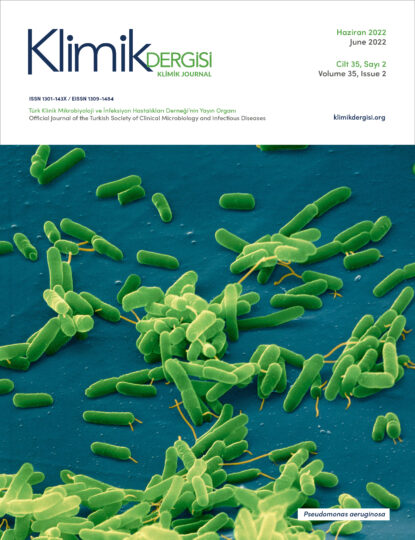
Results: Of the 440 ear swab specimens evaluated, pathogenic microorganism growth was identified in 196 patients (44.5%). 238 microorganisms were isolated from these specimens, comprising 212 bacteria (89.1%) and 26 fungi (10.9%). Pseudomonas aeruginosa was the most frequently isolated pathogen (31.1%), followed by Staphylococcus aureus (21.8%) and Streptococcus pneumoniae (7.1%). P. aeruginosa was isolated significantly more frequently in adult patients than in pediatric patients (p=0.032), whereas S. pneumoniae (p=0.003) and Streptococcus pyogenes (p<0.001) were more prevalent in pediatric patients. Among P. aeruginosa isolates, resistance rates were 47.3% for ciprofloxacin, 29.7% for piperacillin-tazobactam, 27.0% for ceftazidime, and 24.3% for cefepime. Cefoxitin resistance rate was 36.5% in S. aureus isolates.. No resistance was detected to vancomycin, teicoplanin, linezolid, or daptomycin.
Conclusion: Although the distribution of pathogens in ear swab specimens differed according to age groups, antimicrobial resistance rates were similar between pediatric and adult patients. In particular, the high rate of fluoroquinolone resistance in P. aeruginosa and the high proportion of methicillin-resistant S. aureus (MRSA) among S. aureus isolates indicate that empirical treatment strategies should be guided by current local microbiological data.
Keywords: Ear swab culture, ear infection, Pseudomonas aeruginosa, Staphylococcus aureus
-
This work is licensed under a Creative Commons Attribution-NonCommercial 4.0 International License (CC BY-NC 4.0).